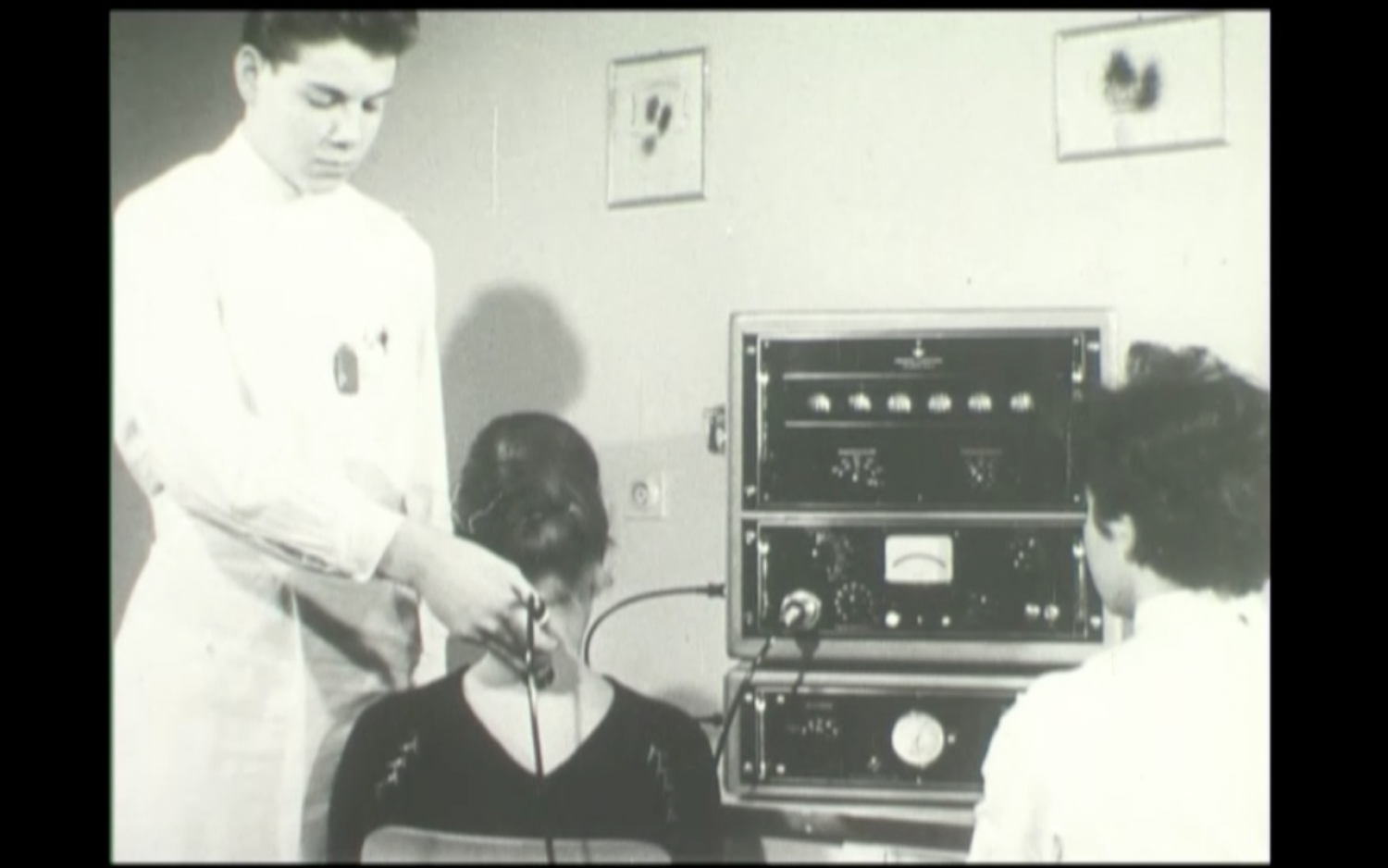
In principle, the teaching aids in the GDR were centrally organised and, from the 1970s onwards, organised according to school subjects. The Central Institute for Film and Image in Teaching, Education and Science (Zentralinstitut für Film und Bild in Unterricht, Erziehung und Wissenschaft), founded in 1950, was responsible for schools, vocational schools, and universities. The institute’s tasks were varied. They included planning, production, and testing of films, photographs, records, and audio tapes, the issuing of research contracts and the development of guidelines for the use of media. In addition, the institute's employees ran training courses for teachers.
In the following decades, several restructurings and name changes took place. In 1964, for example, the production of educational films for universities and technical colleges was hived off and re-established as the Institute for Film, Image and Sound (Institut für Film, Bild und Ton). Six years later, in 1970, the Academy of Pedagogical Sciences of the GDR (Akademie der Pädagogischen Wissenschaften, APW) was founded, establishing an Institute for Teaching Aids that existed until the end of the GDR. In the same year, the Central Department for Rationalisation Resources in Teacher Training and Continuing Education (Zentralstelle für Rationalisierungsmittel der Lehreraus- und -weiterbildung, ZRL) was established at the Erfurt University of Education (Pädagogische Hochschule Erfurt), which took on research and development tasks in the field of teacher training similarly to the APW (→ leading pedagogical institutions).
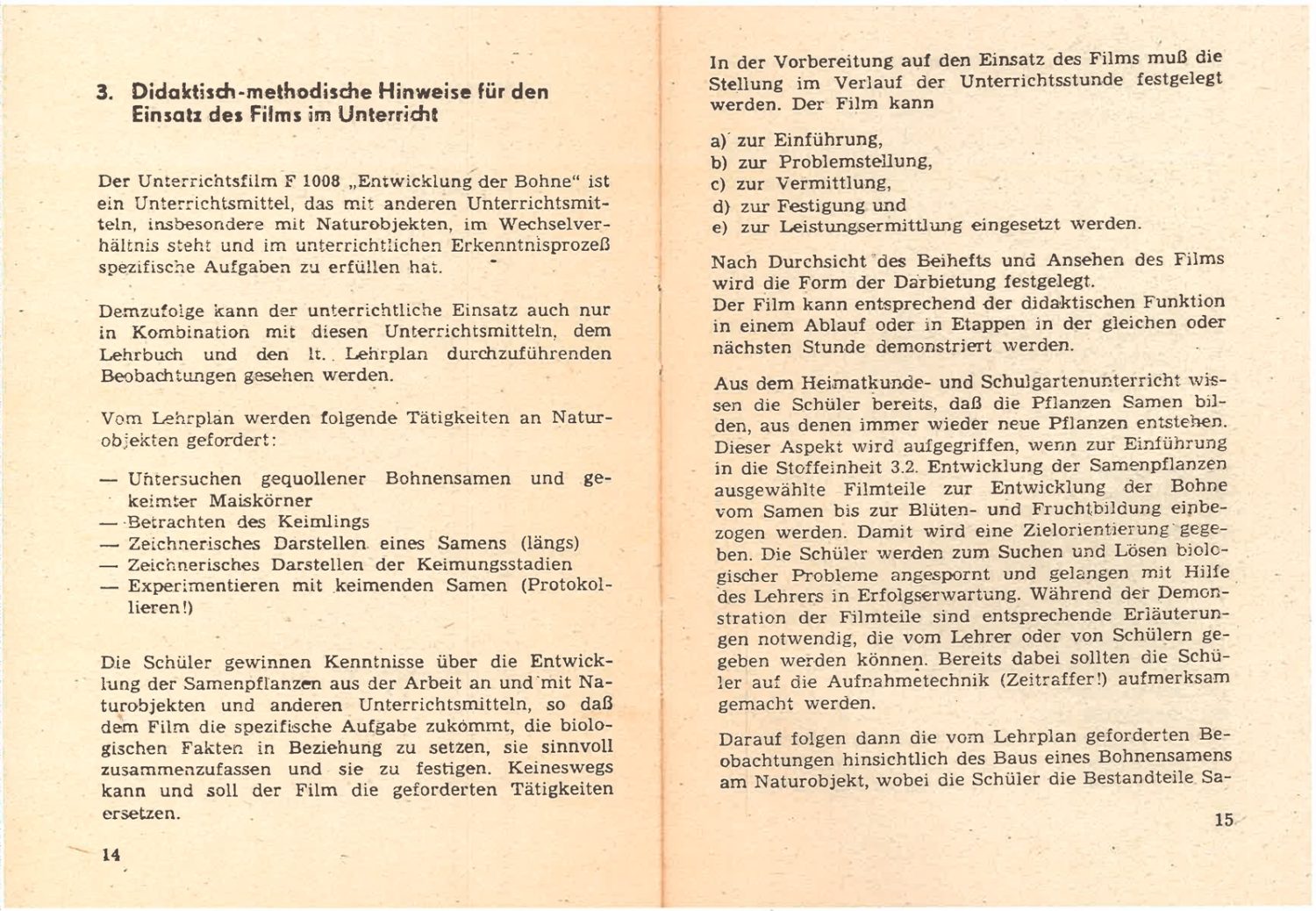
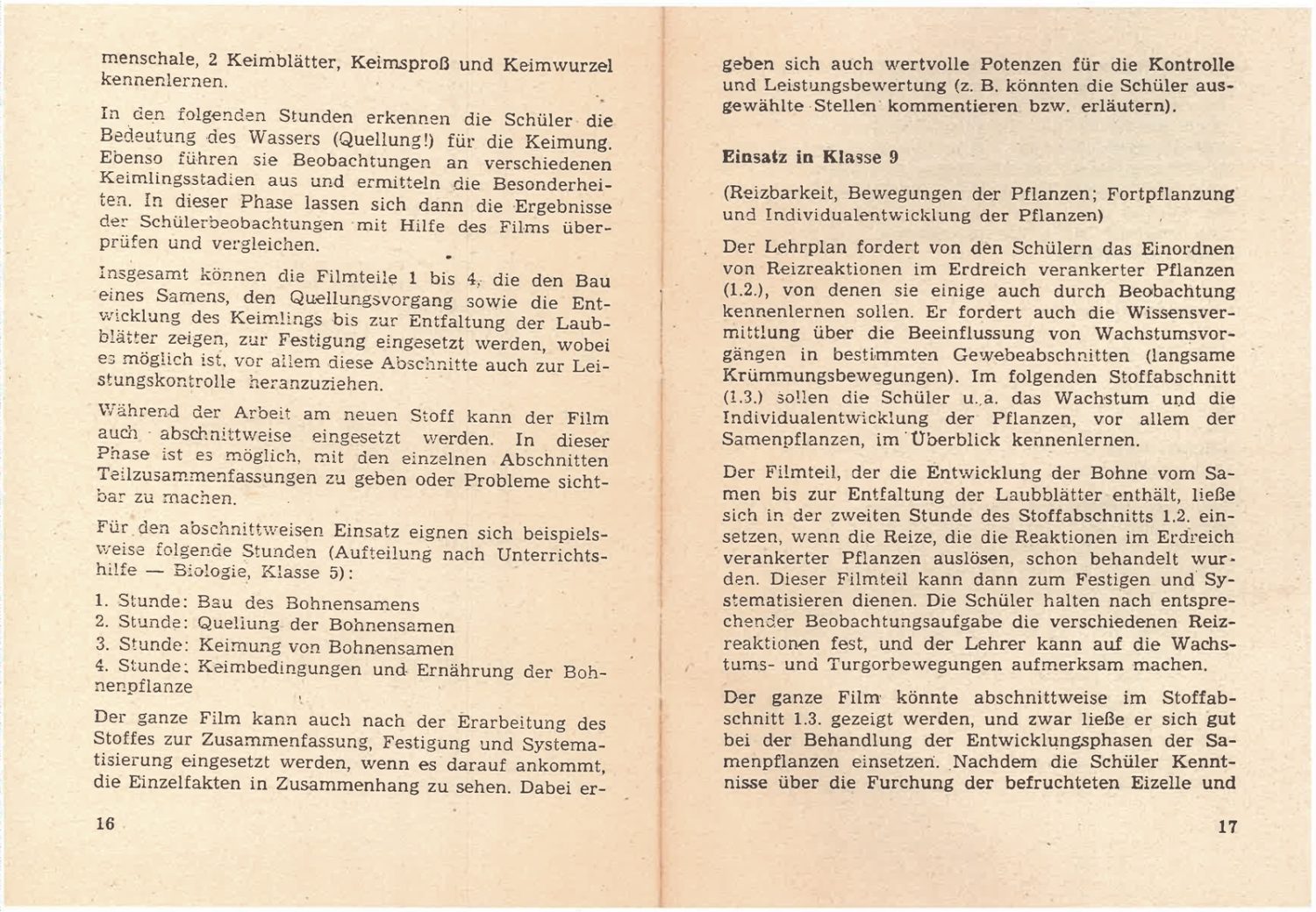
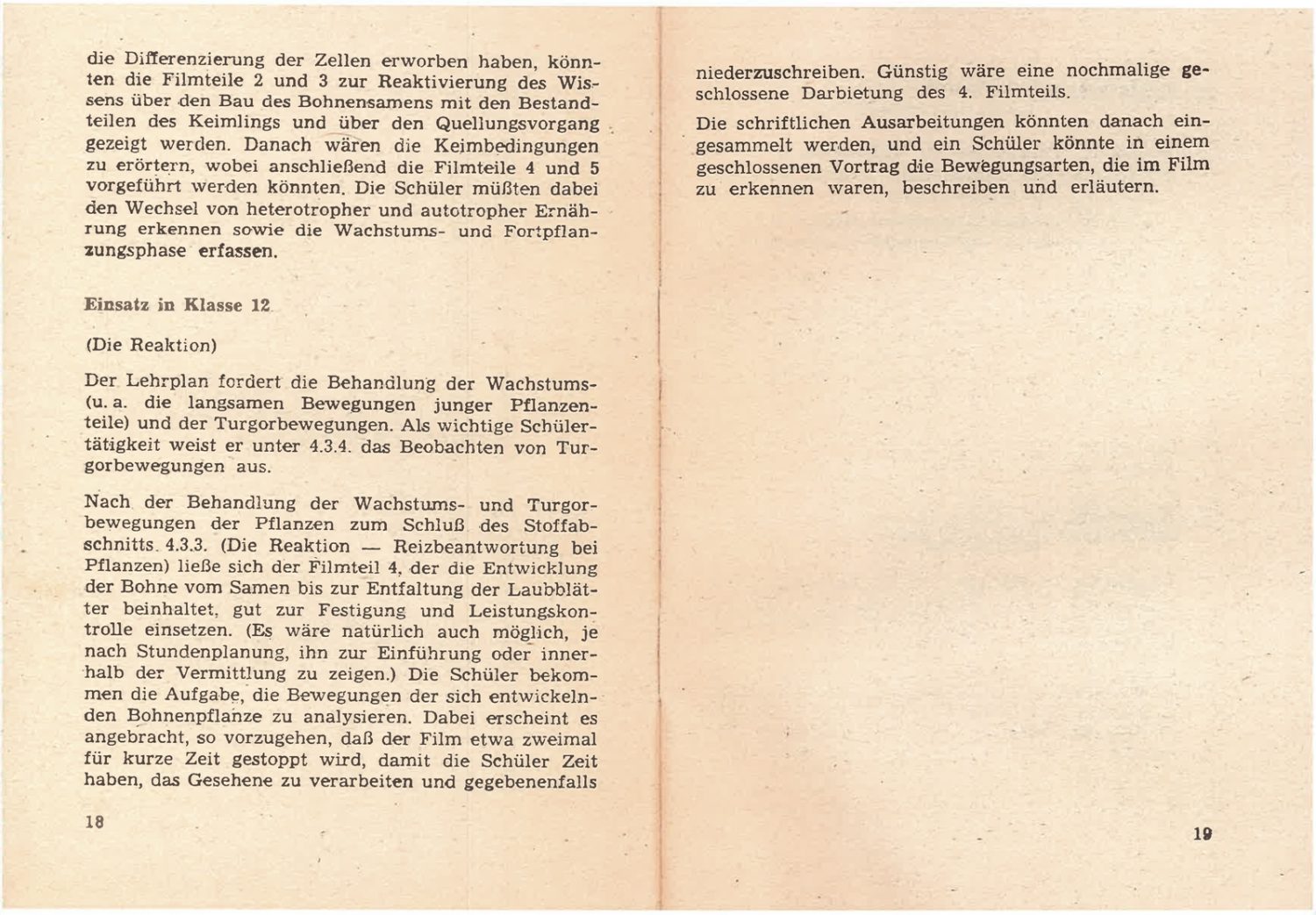
The educational films in the GDR were produced in collaboration with subject didactics researchers (→ subject teaching methodologies) and staff of the Studio for Popular Science Films (Studio für populärwissenschaftliche Filme) or the Studio for Documentary Films (Studio für Dokumentarfilme) of the State Film Company (Deutsche Film AG, DEFA) in Babelsberg. The film stock used for educational films in the GDR, i.e. films produced and approved for teaching in GDR schools, was mostly 16mm acetate film (more rarely 8mm). The films vary in length from 4 to 10 or even 15 minutes and had to be integrated into lessons by teachers. They were advised to use the accompanying supplementary booklets published for each film to prepare the lessons.
The educational film as a complex with other teaching aids of the GDR
In the GDR, attempts were made from the 1960s onwards to base teaching not only on textbooks, but also to systematically design it using an interconnected system of media. This was influenced by cybernetic and systems theory thinking, which also found its way into school policy. Various teaching materials – such as textbooks, films and worksheets – were regarded as components of a comprehensive 'teaching aid system' (Unterrichtsmittelsystem).
The focus was on combining them in a didactically meaningful way:
"The systematic nature of socialist general education, the selection, arrangement and structuring of teaching material, and in particular the desired didactic system solutions, also require the design and use of appropriate teaching resource systems."
(Topp, 1973, p. 38)
Mathematician and educator Vladimir Boltyansky provided the Soviet model: scientifically sound, age-appropriate and methodologically consistent combinations of media were to be used to increase learning success. The 'teaching aid complexes' (Unterrichtsmittelkomplexe) of the 1970s were intended to making teaching more predictable, effective and streamlined.
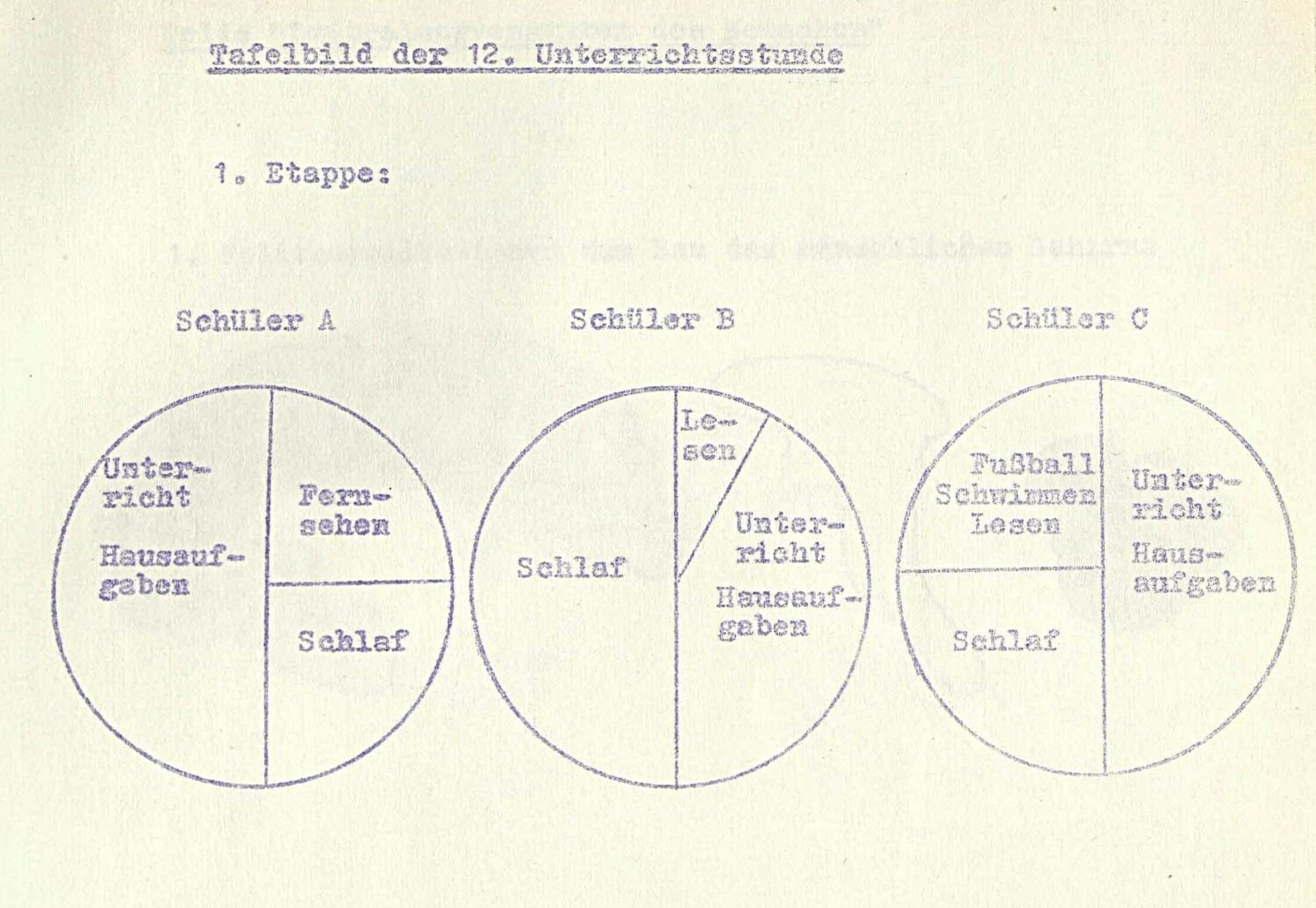
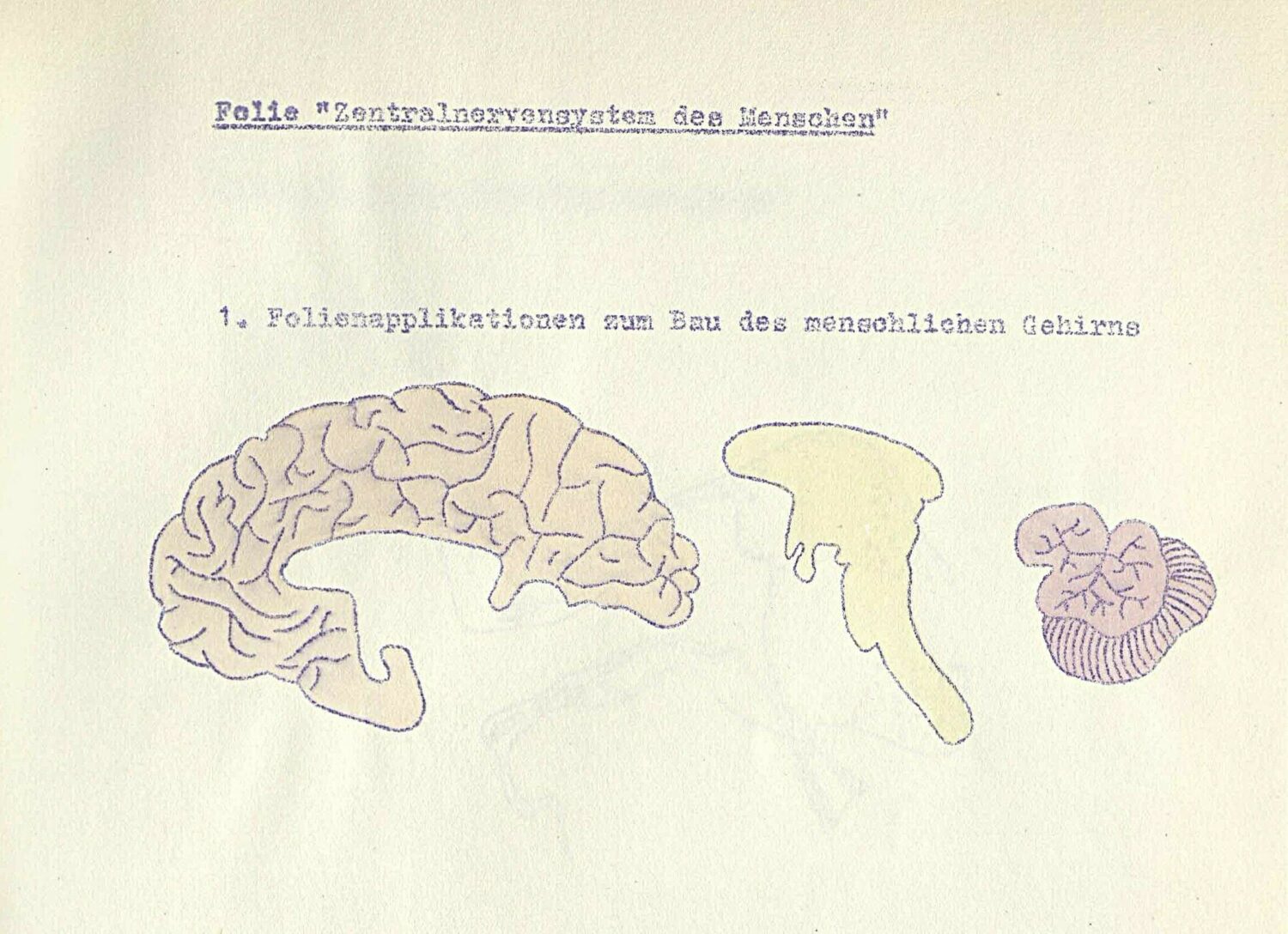
However in practice, the use of educational films in particular was fraught with numerous obstacles. In a large-scale study by Heidemarie Fizia (1977) on a set of teaching materials for biology lessons, it was found that many films f. e. were hardly ever used – partly due to a lack of copies, often because of their length or lack of didactic suitability, but also because teachers were not sufficiently trained or were overworked: "Thus, teaching aids are used that keep the physical effort required of the teacher low, but are unfavourable or even completely unsuitable for the specific point in the teaching process" (ibid.). Particularly if the teacher did not follow the methodological instructions for use, the desired effect was not achieved: "Without specific instructions for use, the teaching material system that was developed did not lead to any significant differences in performance [...]. Only the correct integration of teaching resources into the educational process leads to genuine knowledge gain" (ibid.). These challenges led to a change in the 1980s – away from rigid systems thinking towards a more flexible approach to teaching materials.
-
Fizia, H. (1976): Untersuchungen zur Gestaltung, zum Einsatz und zur Wirkung eines Unterrichtsmittelkomplexes bei der Behandlung der Stoffeinheit "Sinnes- und Nervenfunktionen" im Biologieunterricht der Klassen 8 der allgemeinbildenden Oberschulen der DDR (Diss.). Halle: Martin-Luther Universität Halle-Wittenberg.
-
Fizia, H. (1977): Untersuchungen zur Gestaltung, zum Einsatz und zur Wirkung eines Unterrichtsmittelkomplexes bei der Behandlung der Stoffeinheit "Sinnes- und Nervenfunktionen" im Biologieunterricht der Klassen 8 der allgemeinbildenden Oberschulen der DDR. DIPF/BBF, B3225-Anh [Dissertation].
-
Neupert, D. (1979): Entwicklung der Bohne. Berlin: Akademie der Pädagogischen Wissenschaften der Deutschen Demokratischen Republik, Institut für Unterrichtsmittel.
-
Topp, E. (1973): Zur Funktion, Nutzung und Weiterentwicklung der technischen Grundausstattung der Oberschulen der DDR. Berlin: Volk und Wissen.