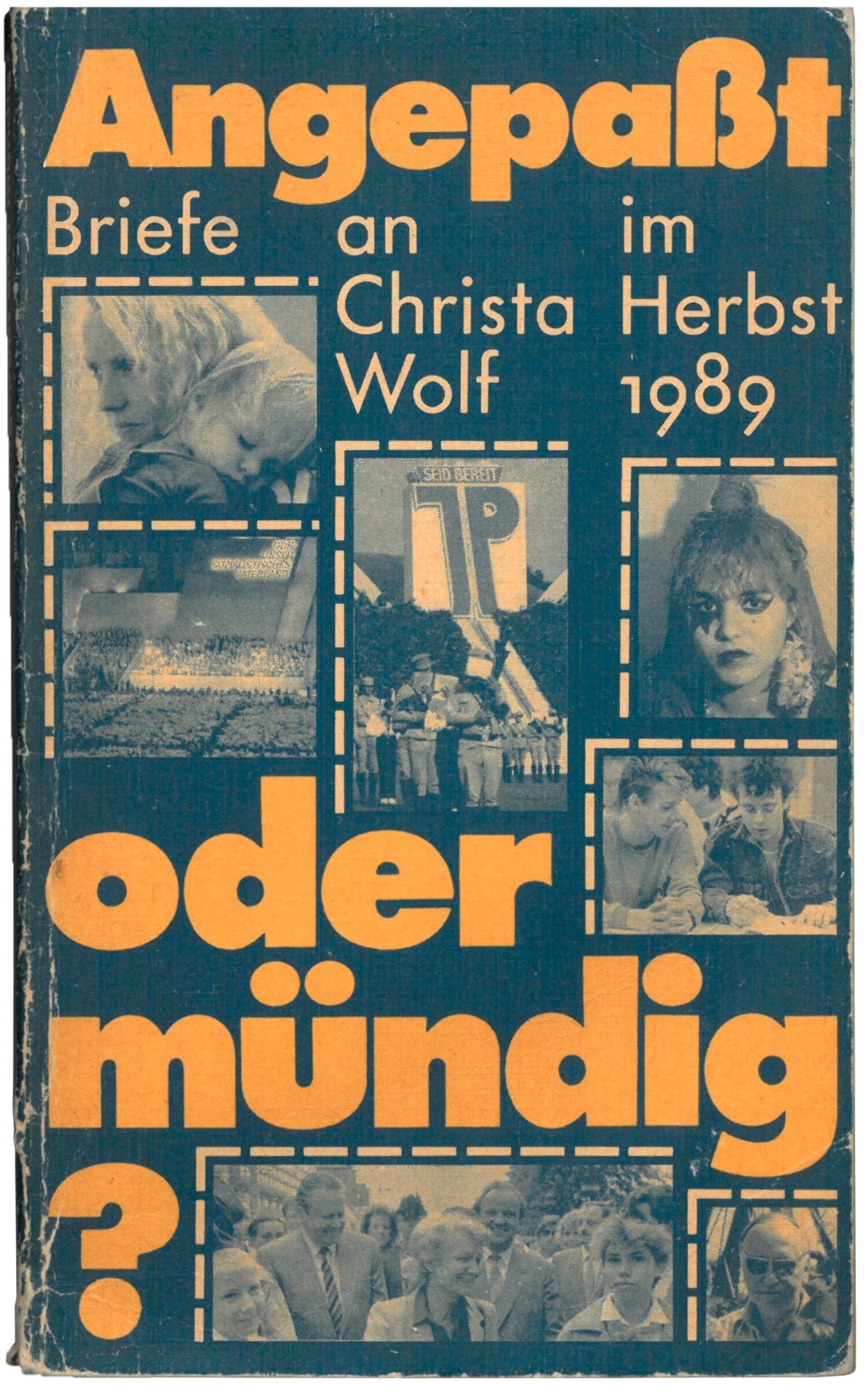
The essay (Wolf, 2021) and its numerous and controversial reception (cf. Biesenbaum 1990; Gruner, 1990) represent a piece of contemporary and education history. On the one hand, it sheds light on the mood in the weeks surrounding the fall of the Berlin Wall (→ transition / transformation). On the other hand, it reveals dimensions of profound discussion that span the issues of impact, responsibility, and ideological appropriation of school lessons in (un)democratic societies. In letters to the editor and contributions from over 300 educators, teachers, and students, the question was discussed as to whether the interaction between teachers, students, and – mostly literary – teaching materials could have permanently prevented people from realising their linguistic and cognitive abilities.
The core debate unfolded in late autumn 1989. In her essay, which appeared in the Wochenpost, a popular national newspaper, Wolf attempted to identify causes of the masses of people wanting to leave the country and protesting. Her focus was on schools and teaching as a means of education and socialisation.
„Two weeks ago, after a reading in a small town in Mecklenburg, a doctor implored those present, who had very quickly turned the literary discussion into a political discourse, that everyone should now at least speak their mind openly and clearly, not allow themselves to be intimidated, and not act against their conscience. In the silence that followed his words, a woman said quietly and sadly: We haven't learned that. Encouraged to continue, she spoke about the political and moral development of her generation – now in their late fourties – in this country: how she had been encouraged from an early age to conform, to toe the line, and, especially at school, to carefully express the opinions that were expected of her in order to ensure the smooth progress that was so important to her parents. A chronic schizophrenia had hollowed her out as a person. Now, this woman said, she couldn't suddenly speak openly and express her own opinion. She didn't even know exactly what her own opinion was.“ (Wolf, 2021, p.3)
This can also be interpreted as an indictment of all those who had become accustomed to everyday life in the GDR, who perhaps also repressed profound problems within management circles or media reports. The underlying problem, according to Wolf, was that "our children are being brought up to be untruthful and their character is being damaged, that they are being bullied, incapacitated and discouraged" - a fate that had already befallen the parents' generation. She contrasted this with "desperate efforts" of individual teachers and an astonishing "national literary talent" that was expressed in the emerging ideological and political discussions (ebd.).
In the Wochenpost essay, Wolf expands on this:
„That evening, addressing the young woman I mentioned at the beginning, we also spoke of a metaphor that Chekhov once used: having to 'squeeze the slave out of himself drop by drop'. In recent weeks, it seems to me that many of us have been squeezing 'the slave' out of ourselves by the litre. But we should not deceive ourselves: the traces of disenfranchisement in many people will have a more lasting effect than, for example, economic distortions. Until now, it has been art, often attacked for doing so, that has noticed and described such phenomena. How wonderful it would be if journalists, sociologists, historians, psychologists, social scientists and philosophers would now also do their duty publicly." (ebd.)
Without diminishing the variety of responses received, one can identify within them a focus among teachers who gave vent to their discontent or felt understood in their inner conflicts. Christa Wolf herself was addressed personally as well as the general public. One long-serving teacher asked, for example:
"However, I reject the way Christa Wolf speaks disparagingly of the work of teachers and school management. Can she really appreciate what is done every day in our educational institutions? Is this art that is only intended to stir up debate when tireless work is denigrated in this way?"
A researcher described overwhelming situations:
"The attempt to partially paralyse critical thinking and debate must lead to the death of creativity, imagination and the joy of learning in every person, but especially in children and young people. The students 'prepared' in this way by popular education then come to our universities and are silent and full of mistrust towards their university teachers, and not always without reason. A slavishly obedient citizen cannot become a creative, successful researcher. This misery is now having a painful impact on science and business, and specific people are responsible for it. In my view, there is only one consequence: resignation from their offices."
The school system’s condition was said to be partly responsible for the economic decline of the GDR, and academic achievements were said to be achieved not because of, but despite this condition. Students themselves also spoke up. Only recently, wrote a former student, did she become aware that she had been brought up to be dishonest. At the same time, she had experienced this particularly in her dealings with literature:
"Books like Werner Holt, Olga Benario, a recently published book about Tamara Bunke and many biographies of - so-called - upright communists give us a picture of young people who were faced with decisions at a very early age, forced to search for ideals and the right path. We are expected to adopt these ideals, even though they have largely been realised (or seem to be!), to be equally "upright communists", even though it is not possible with these false ideals, and there were no alternative ideals to strive for. (But hopefully there are now!) [...]"
Another understood Wolf’s remarks as an accusation of "weakness of character, careerism, and subservience" and strongly rejected them.
Some of the letters were published on November 16, 1989, in a completely changed public sphere. This also influenced Wolf in writing a reply essay to her readers titled "It hurts to know" (Es tut weh zu wissen, Wolf, 1989). The question of public education in the GDR touched on sensitive points of the general social mood, and defensiveness and concern were evident in the letters, she summarises:
"There are two parties facing each other that seem to have lived in different countries with different realities." (Wolf, 1989, p. 13)
The fact that these polarising camps wanted to make room for their own position was evident in the constant flow of letters. Reports of experiences alternated with questions about the future of general school education. The teaching profession must certainly deal with fundamental criticism, said one physics teacher:
"The consensus that a teacher could find in his relationship with his students was based on the tacit agreement that it was better not to contribute his thoughts on certain problems."
The training of teachers (→ teacher training) should be reconsidered. In another letter a subject didactics researcher (→ subject teaching methodologies) also took this view: fundamental reforms of the school system (→ the people's education system) and a reappraisal of the processes in the leading institutions (→ leading pedagogical institutions) are needed – but the question of the demands on the goals of the school remained for him – as for many long-standing teacher trainers – a question that was specific to the GDR:
"How can a teacher best fulfil his duty as educator of the people?"
More than 300 contributions to the debate are now on loan to the Research Library for the History of Education at DIPF (Bibliothek für Bildungsgeschichtliche Forschung). With the author’s permission, some of them were published in 1990 in an anthology by Petra Gruner, which was to trigger a new controversy - this time in a specialised field. The German didactician Hannegret Biesenbaum took up Christa Wolf's original argument and several reports of experiences that had been published subsequently. Towards the end of 1990, reunification was a done deal, structural reform and curricular upheavals were planned, East German methodologists sought on the one hand to network with their West German colleagues and on the other hand found themselves increasingly in need of legitimacy during the restructuring of the academic world and teacher training. Biesenbaum's position on teaching in the GDR was clear.
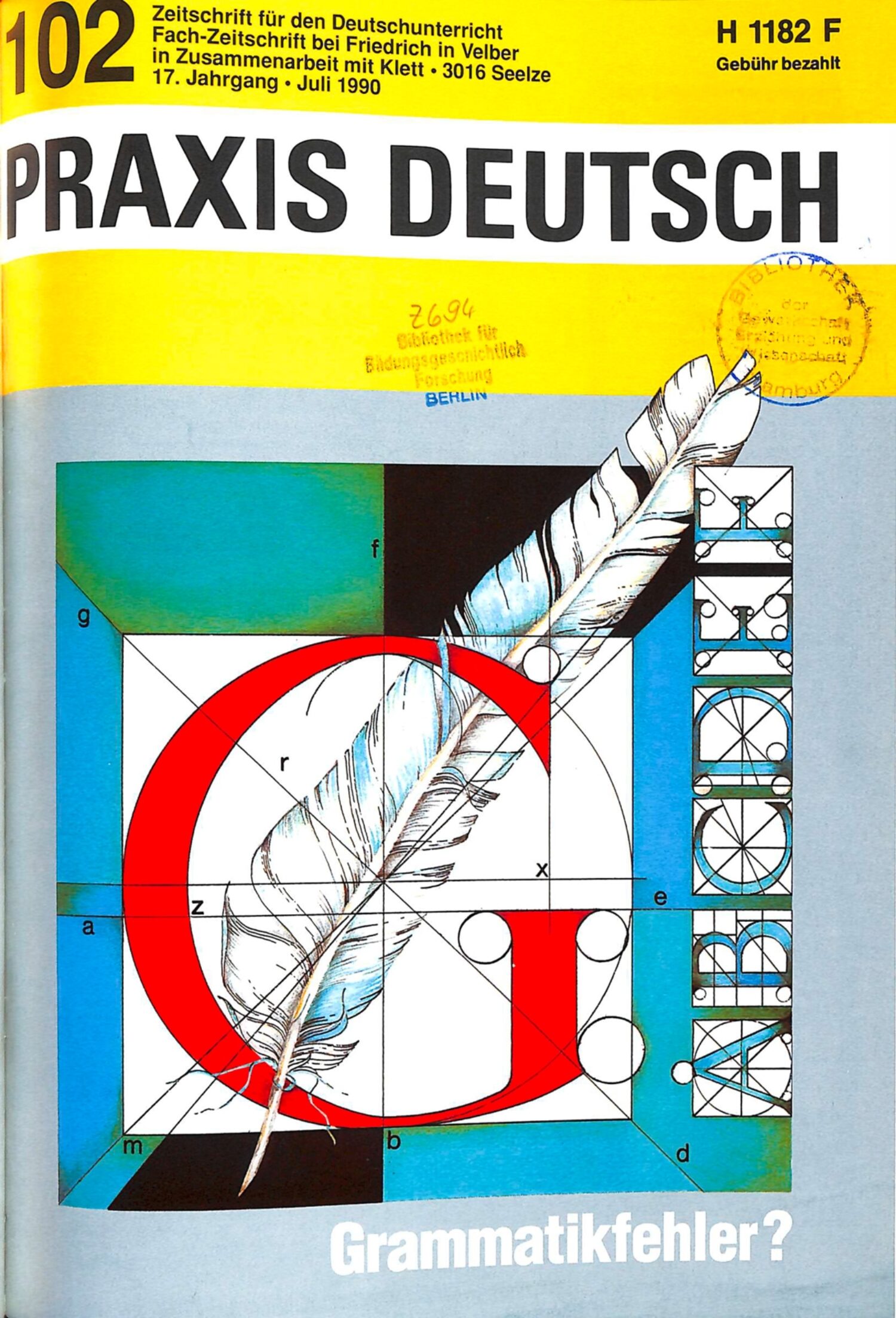
In the free section of the highly circulated didactics journal Praxis Deutsch, whose main target audience was teachers and German didacticians, she took on recently repealed guidelines in the subject area of native language learning and placed them in direct connection with mental illnesses in children and adolescents, which had been addressed in Wolf's essay:
"The lessons are therefore based on both technical and linguistic tasks, which are tailored to the children's comprehension with the help of psychology, personality theory and methodology. The words of the former president of the Academy of Pedagogical Sciences of the GDR (Akademie der Pädagogischen Wissenschaften, APW), Gerhart Neuner, are telling in this context. He praises the curriculum as a 'significant scientific achievement' and then describes the second step as 'implementation in practice'. The science, the theory as the primary goal, the student and his practical life as the secondary goal." (Biesenbaum, 1990, p. 4)
The "priority of the material over the person" (Vorrang des Materials vor dem Menschen) and the pressure to be ideologically and politically partisan (→ partisanship) overshadowed any possible methodological innovations. The APW (→ leading pedagogical institutions), as the publisher of the curricula, refrained from making statements instead of supporting the personal development of children and young people.
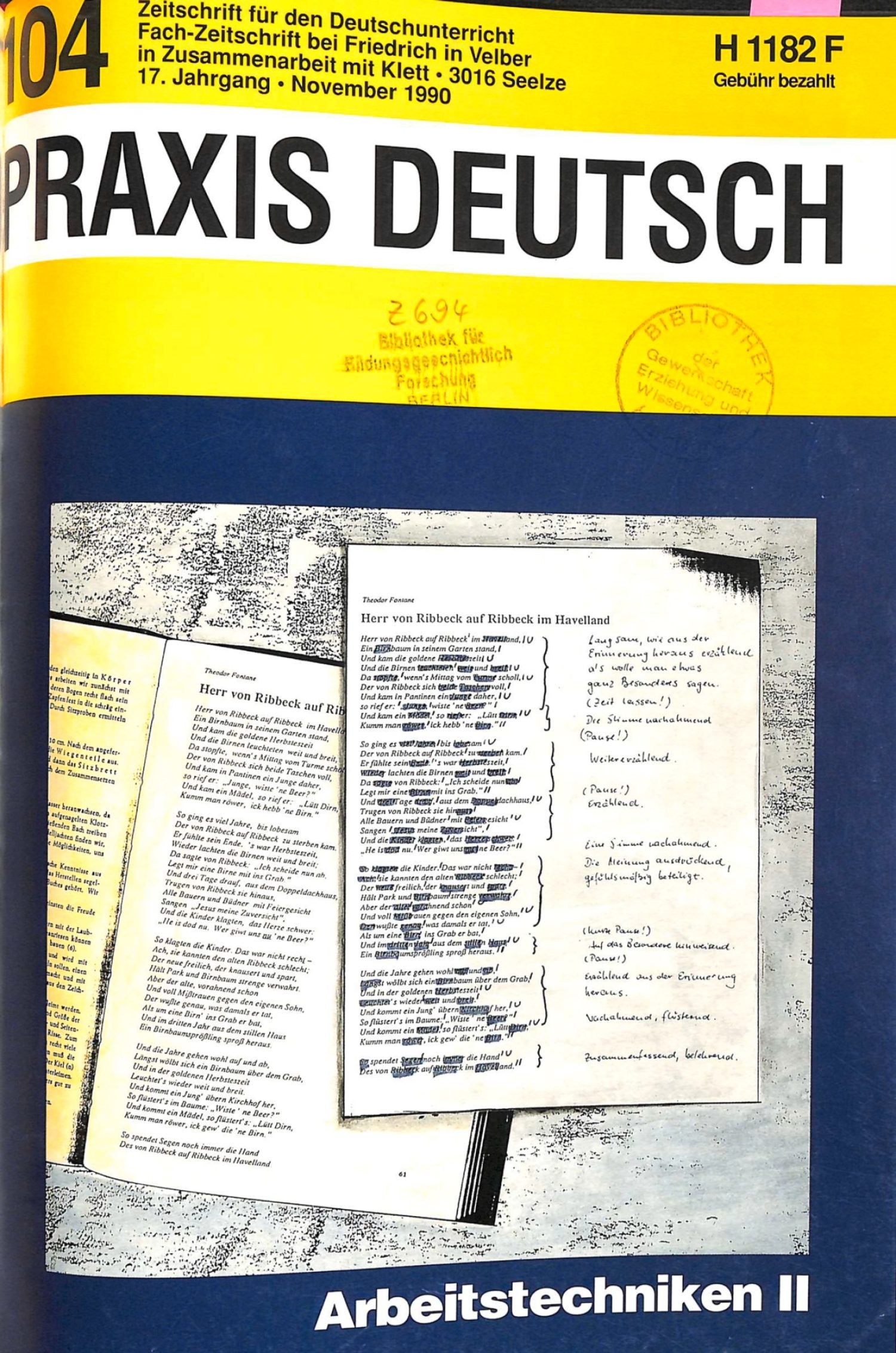
The article by a co-editor published in issue 104 of Praxis Deutsch reveals a lot about how sharp the readership’s response was. Jürgen Baurmann first felt compelled to point out that Biesenbaum's article had not been edited or discussed. He reported on the tremendous negative reactions of East German readers and then expressed himself as an individual reader of the text - but also of the subsequent letters, which in his opinion depicted a 'process' that went beyond mere reception:
"School and school practice are always embedded in a social context. Within this context, curricula represent only one component - even within a centralized state. (...) A superficial criticism of the curriculum from a safe port does not help in this situation. The criticism is, in my opinion, know-it-all, to some extent it can also be perceived as arrogant." (Baurmann, 1990, p. 6)
In the debate, Baurmann warns against falling prey to an "ideology of value-free upbringing and education" (Ideologie einer wertfreien Erziehung und Bildung) (ebd.) and wishes for an open and committed discussion about German lessons in east and west.
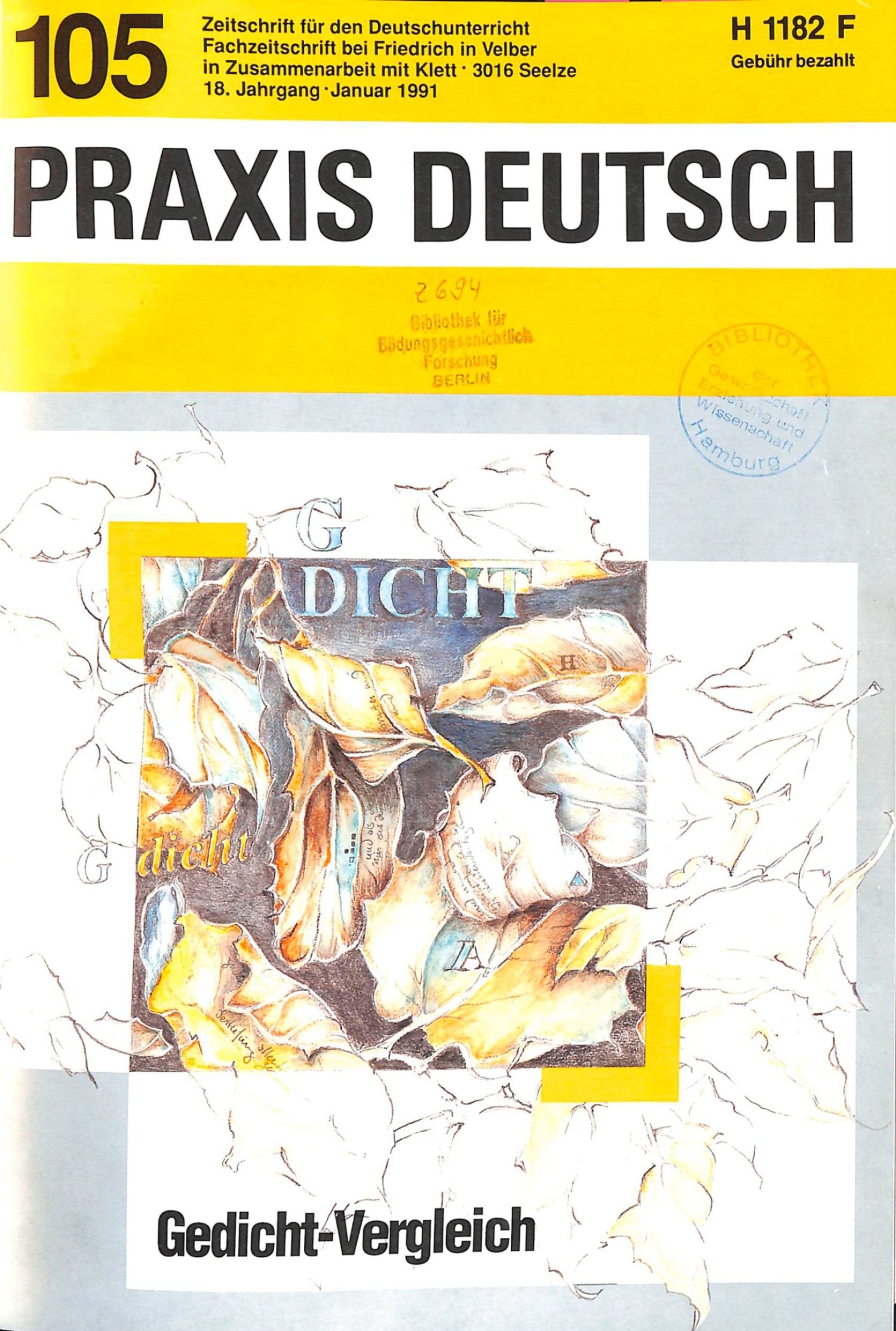
A few weeks later, a further contribution to the discussion appeared by methodologist Bodo Friedrich, who, as head of the Department of Native Language Methodology (Abteilung für Muttersprachfachmethodik) at APW, was responsible for the curriculum to which Hannegret Biesenbaum had attributed such great effectiveness. He described his short opinion piece as an attempt to write about the difficulty of "understanding the immediate past as history" (Schwierigkeit, die unmittelbare Vergangenheit als Geschichte zu begreifen, Friedrich, 1991, p.4). He stated that concrete historical contextualisation was missing and thus criticised approaches that, in his opinion, had "covered up all the complexities and contradictions with the currently prevailing patterns of thought" (ebd.). In doing so, he referred to the utopian educational goals of the GDR education system as well as to the strategies for dealing with this type of program:
“In the GDR and certainly in other countries with the same political structure, there was an additional element that is probably difficult to understand for people who have never lived in a centrally organized state. It is the divergence between the announced theory and the political intentions pursued by the ruling party with this announcement; in communication theory terms, it is the divergence between meaning and sense, between what is said and what is meant. The goals that were repeatedly officially announced (building a society with the most just and social order imaginable, breaking down of educational privilege, high education for all children of the people, universality of education, etc.) repeatedly gave researchers in education science and, of course, teachers the opportunity to take them literally and to use them to stand up against pragmatic-ideological simplifications and to develop their own concepts of more humane teaching.” (Friedrich, 1991, p.5)
The impetus for a confession is strengthened when Friedrich complains that one can appear as the great "Goggelmoggel [Humpty Dumpty] and easily put the opponent in the wrong by taking away the meaning of his words" (als der große Goggelmoggel auftreten und den Widersacher schon dadurch leicht ins Unrecht setzen, indem man ihm die Bedeutung seiner Wörter nimmt) (ebd.). Partisanship could also be conceivable as a general partisanship for the progress of humanity - a reading that is, however, incompatible with the lexical sources that he cites as evidence. The problematic selectivity with which the interrelationships between political-ideological appropriation and subject matter expertise in teaching in the GDR since the transformation period have been discussed - it can be seen particularly clearly in these positions.
While these debates merge into one another, they make clear how narrative and identification patterns on the topic of education and school in the GDR can emerge discursively, how deeply they were rooted in personal experiences from the very beginning, and what the basic motives of criticism, appreciation, justification and accusation were. Most positions affirmed - despite their contradictory nature - that teachers and their teaching have comprehensive responsibility for the teaching of a linguistically constituted social participation.
Excerpts from "We haven't learned that" in: Christa Wolf, Sämtliche Essays und Reden. Band 2: Wider den Schlaf der Vernunft (1981-1990) © of this edition Suhrkamp Verlag GmbH, Berlin 2021.
-
Baurmann, J. (1990): Gegen vorschnelle Besserwisserei. In: Praxis Deutsch 17, 104, S. 6.
-
Biesenbaum, H. (1990): „Aufrichtig und Parteilich“. Ansprüche und Widersprüche im Lehrplan Deutsche Sprache und Literatur der DDR. In: Praxis Deutsch 17, 102, S. 4–6.
-
Friedrich, B. (1991): Von der Schwierigkeit, die unmittelbare Vergangenheit als Geschichte zu begreifen. In: Praxis Deutsch 18, 105, S. 4–5.
-
Gruner, P. (Hrsg.) (1990): Angepaßt oder Mündig. Briefe an Christa Wolf im Herbst 1989. Berlin: Volk und Wissen.
-
Malotki, C. v. (2024): „Welches Ziel verfolgen wir mit unserer Diskussion?“ – Kontroversen über Fachlichkeit im Deutschunterricht der DDR. In: Wähler, J./ Reh, S./ Lorenz, M./ Scholz, J. (Hrsg.): Fachunterrichtsgeschichten. Studien zur Geschichte der Praxis des Fachunterrichts. Bad Heilbrunn: Klinkhardt, S. 296–316.
-
Wolf, C. (1989): Es tut weh zu wissen. In: Wochenpost 36, 47, S. 3.
-
Wolf, C. (2021): Das haben wir nicht gelernt! In: Hilzinger, S. (Hrsg.): Sämtliche Essays und Reden, Band 2: Wider den Schlaf der Vernunft (1981-1990). Berlin: Suhrkamp.